














We present the industrial and intellectual property and active projects available to the Valdecilla Health Research Institute (IDIVAL), which are looking for partners and/or licensees in the industry.
The developments are organised according to the main industrial areas (medical devices; biomaterials and biomolecules; diagnostics and others) and are subdivided according to the medical area involved.
If you are interested in any of the following products or in collaborating with the projects, please contact the IDIVAL innovation team:
Patricia Zorrilla de la Fuente, Senior Expert Technician in Knowledge Transfer.
Nieves Martínez Murillo, Senior Technician Expert in Knowledge Transfer

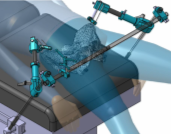
The stereotaxic arc for pelvic surgery enables easier navigation of the pelvic area using a 3D coordinate system, facilitating the localisation of small targets within the body, such as cancerous tissue, during minimally invasive robotic-assisted surgeries.

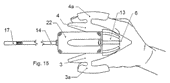
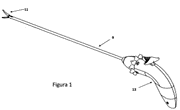
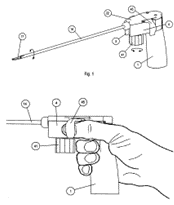
Handle for a distal laparoscopic surgical tool provided with means for operating the distal laparoscopic surgical tool, comprising a handle and two solidary levers which are configured to operate the distal tool and are arranged one on each side of the handle, so that one of the levers is configured to be operated by the thumb and the other lever is configured to be operated by the index finger, while the handle is configured to be grasped by the other three fingers together with the palm of the hand.

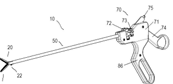
An instrument for endoscopic surgery comprising a handle, a distal tool and an articulating mechanism of the distal tool linked to the handle by means of a linkage mechanism, comprising an extension tube housing a drive rod and an intermediate tube between the two.
Intragastric device intended to be inserted into a gastric cavity to restrict its capacity. To contribute to optimal adaptation, its design is based on the principle of neutral buoyancy. The device comprises an inner core and an outer shell.

A laparoscopic surgery simulation device for training surgeons to be inserted into a laparoscopic simulation machine, comprising a plurality of upper orifices for accommodating a pair of surgical forceps.

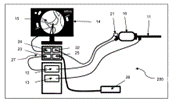
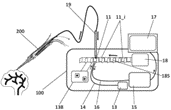
The present invention relates to a system for improving spatial orientation in endoscopic surgery, configured to control the spatial position of the endoscope with respect to a reference position.

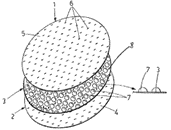
Abdominal viscera protective dressing for application of negative pressure therapy in the open abdomen, consisting of a top layer, a middle layer and a bottom layer, each consisting of a lamellar body. The upper layer incorporates a plurality of first fluid passages and the middle layer incorporates numerous low pressure gas-filled bubbles and a plurality of second fluid passages. These bubbles prevent damage to the abdomen and prevent the sheets from sticking together. The three layers adhere to each other at their respective perimeter edges.

Handle for a distal endoscopic or laparoscopic surgical tool, comprising a handgrip, a jockey wheel and an operating lever, such that the palm of the hand and the middle, ring and little fingers firmly surround and hold the handgrip, while the thumb rests on the operating lever, and the index finger rests on the jockey wheel.

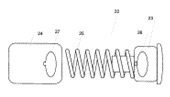
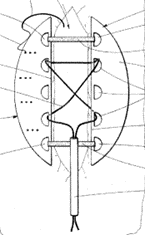
A trocar occlusion and fixation system for laparoscopic surgery, comprising a thread and a fixation device comprising a perforation.

Handle for a distal endoscopic or laparoscopic surgical tool, comprising means for manually operating said distal tool with a handle and two actuating levers that move together and are configured to jointly operate the distal tool, such that one of the levers is configured to be actuated by the thumb and the other lever is configured to be actuated by the index finger, and each lever is configured to be actuated by both opening and closing the actuating finger, while the handle is configured to be grasped by the other three fingers, middle, ring and little finger, together with the palm of the hand.

The present invention relates to a surgical device for closing or suturing wounds and relates in particular to a dynamic wall traction device for progressive closure of the open abdomen.


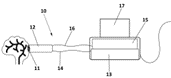
The present invention provides a new device based on plasmonic technology - plasmonic chip - for the discrimination of different tumour regions, for example of GBM, in real time. Specifically, the device allows for the real-time identification of at least necrotic, tumour and peritumour tissue.

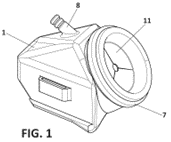
Protective mask for nasal manipulation, to reduce the exposure of healthcare personnel to aerosols during nasal manipulations such as nasal endoscopy, bronchoscopy, endoscopic naso-sinus and anterior skull base surgery or placement of nasogastric tubes.

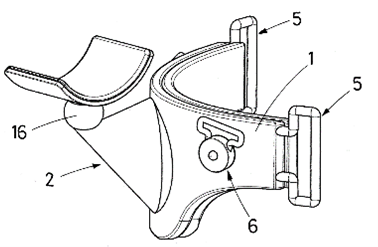
Armrest device for surgeons, which is attached to the user's body in a similar way to a harness or similar. The device is specially designed to be used during endoscopic surgeries, and allows eliminating or reducing the multiple musculoskeletal complications that occur in surgery professionals due to the unergonomic postures that must be adopted and maintained for long periods of time.

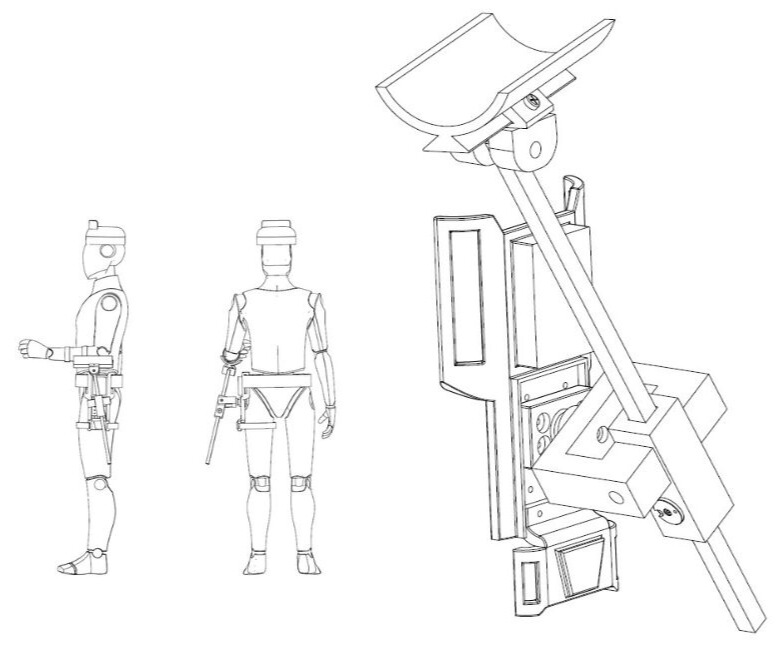
Development of minimally invasive surgery has gone hand in hand with technological advancement, incorporating special surgical instruments into the operating room. Manipulation of this technology by surgeons imply the adoption of forced and uncomfortable postures during surgical interventions. The present exoskeleton improves the ergonomics of surgeons during minimally invasive surgery (MIS) interventions. Its use helps to mitigate the physical fatigue of the surgeon during operations and reduces or eliminates various musculoskeletal injuries that may arise in the medium and/or long term in surgeons due to the adoption of forced and static postures for long periods of time.

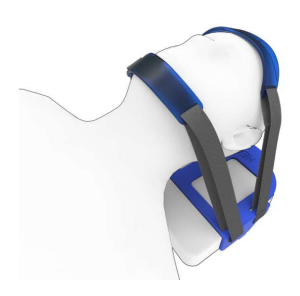
In ophthalmic surgery, maintaining the patient's head in a stable and precise position is crucial to the accuracy and success of the procedure. Even slight movements during delicate eye surgeries can lead to complications, reduce effectiveness, or require repeat operations. Head restraint devices are essential to allow the surgeon to perform highly precise and delicate maneuvers. To meet the current needs in these surgeries, a head restraint device is introduced that offers stability, ease of use, and patient comfort, while allowing unobstructed access to the surgical field during ophthalmic procedures.

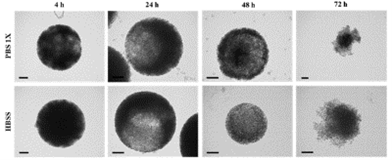
Silica particles comprising nucleic acids encapsulated therein. Likewise, the present invention relates to a method for the production of such particles and their uses in gene transfer or cell labelling and as a medicament, particularly as a protein/enzyme replacement therapy medicament and as an immunisation system.

Synthetic viral nanostructures are obtained by means of magnetic nanobiopsy. These nanoestructures can serve as a medicine, as a vaccine, or for the in vitro analysis of compounds capable of inhibiting viruses, for the in vitro validation of antibodies, or as an in vitro intracellular biopsy system. The presented magnetic nanobiopsy platform allows longitudinal, non-destructive molecular sampling of living cell populations.
Oncology

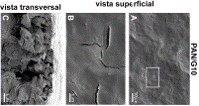
A composite membrane material consisting of a biocompatible polyacrylonitrile polymer and a plurality of graphene nanoplatelets, wherein said graphene nanoplatelets are randomly distributed on the polyacrylonitrile forming clusters. Furthermore, the present invention relates to its production process and its use as a substrate or scaffold for in vitro cultures of cancer cells.

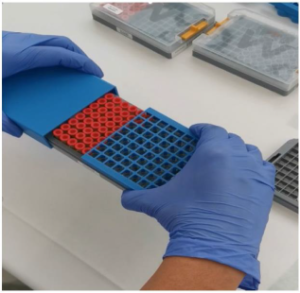
Device specially designed to facilitate and optimise the transfer of tubes or cryotubes from one rack to another. It allows a large number of tubes to be handled simultaneously and their selective or total transfer from one rack to another while maintaining the original position. In this way, positional errors due to individual tube handling are avoided. The device consists of two parts, one part is used to hold and transfer the selected tubes, the other part is used to hold the rows of tubes that are not to be transferred.

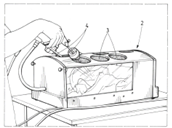
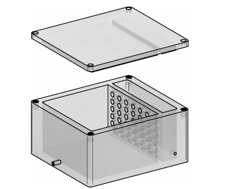
Synthetic cardiopulmonary block simulators do not allow for the training of certain endoscopic techniques. On the other hand, the use of cadavers or live animals is costly. The simulation device for respiratory endoscopy techniques presented here allows for the practice of endoscopies on a cardiopulmonary block of animal origin without the need for the animal's body. It allows the use of actual organic tissue without the need to use live or deceased patients or animals. The simulator consists of a box, a drainage tube, a tube, and a removable top cover. In the position of use, the box, formed by a lower bottom and side walls, includes a working chamber where the cardiopulmonary block (trachea and lungs) is fixed, and an aspiration chamber, separated by a breathable intermediate membrane.
Biomedical research and innovation are only possible thanks to everyone’s collaboration. This is how we move forward in improving the health of patients and the wider community